Published June 2, 2026 · by Anže Skodlar
Non-Compete Clauses in Employment Contracts: What Employers Need to Know
Non-compete clauses are among the most frequently mis-drafted provisions in employment contracts. Here is what makes them valid and enforceable under the Slovenian Employment Relationships Act (ZDR-1).
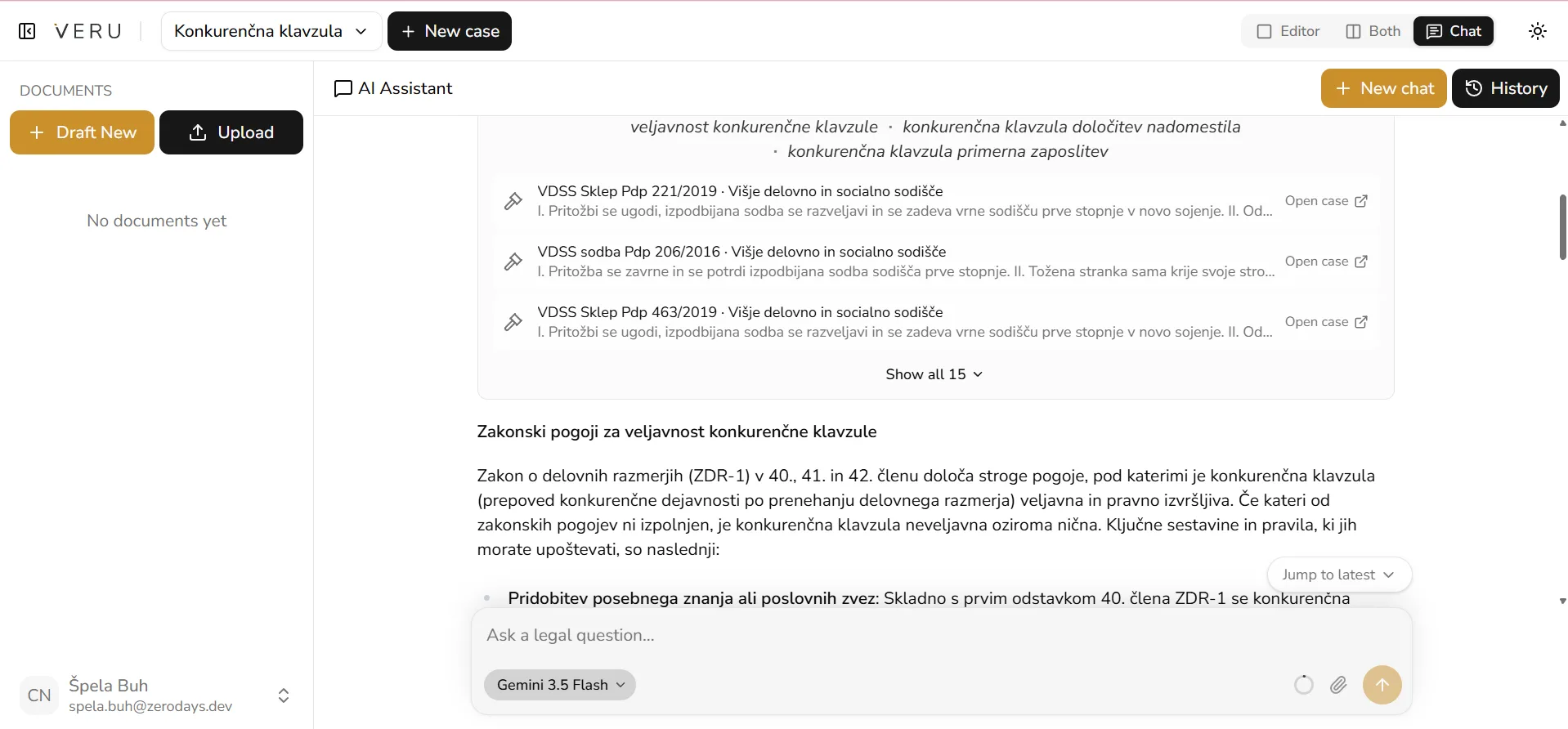
Many employers include a non-compete clause in employment contracts almost as a matter of routine — a standard provision added "just in case." The problem is that non-compete clauses are among the most frequently mis-drafted provisions. They may be too broad, too vague, or missing a required element, which makes them unenforceable. When a former employee joins a competitor and a dispute arises, employers are often surprised to find that they cannot rely on the very clause they thought would protect them.
Because a non-compete clause restricts an employee's constitutional right to freely choose and pursue work (Article 49 of the Slovenian Constitution), it must comply with the strict requirements set out in the Employment Relationships Act (ZDR-1, Articles 40–42) in order to be valid and enforceable.
When drafting and including a non-compete clause, keep the following requirements in mind.
When can a non-compete clause be used?
A non-compete clause may only be agreed if the employee, through their work or in connection with it, gains access to technical, production-related, or business know-how and business contacts that are not publicly available and whose use for another employer could compete with your business.
Essential elements of a valid clause
To ensure the clause is not void, its scope and terms must be clearly defined and proportionate.
- Written form: The clause must be agreed in writing. In practice, it is usually included directly in the employment contract.
- Time limit: A non-compete obligation can last for a maximum of two years after the employment relationship ends.
- Restricted activities: The clause must clearly specify what the employee is prohibited from doing — for example, working for a competing business, independently running a business that competes with yours, or providing services to or collaborating with your customers.
- Compensation: The contract must provide financial compensation to the employee for complying with the restriction.
The most important requirement: financial compensation
This is where employers most often make mistakes. If the non-compete clause significantly limits the employee's ability to earn an income comparable to their previous salary, you must pay compensation for the entire period during which the restriction applies.
- How it is set: The amount must be expressly stated in the employment contract.
- Minimum amount: It must be at least one-third of the employee's average monthly salary during the last three months before the employment ended.
- Consequence of non-payment: If compensation is not agreed or is not paid, the non-compete clause does not apply.
Does the clause apply to every type of termination?
No. A non-compete clause only binds the employee if the employment relationship ends in one of the following ways:
- the employee gives ordinary notice;
- the employment ends by mutual agreement between the employee and the employer; or
- the employer terminates the employee for cause — either through extraordinary dismissal or a fault-based ordinary dismissal.
Waiving the non-compete clause
If, when the employee leaves, you decide that the restriction is no longer necessary and you do not wish to continue paying compensation, you can agree in writing with the employee to release them from the non-compete obligation.
Contractual penalty
It is also advisable to include a contractual penalty for breaches of the non-compete clause. The amount must be proportionate to the loss the business would suffer and must not be excessive — otherwise a court may reduce it.
Need support with legal work?
A non-compete clause drafted without a clear understanding of the legal requirements does not protect you — on the contrary, it can become void at the very moment you need it most.
Veru Legal AI helps you prepare contracts and other legal documents quickly and reliably — always supported by case law and applicable legislation. Traceable, transparent, and verifiable.